Navigating the roads in major British cities has become a bit of a puzzle lately. If you plan to drive through London, Birmingham, Bristol, or several other urban hubs, you have likely run into a confusing alphabet soup of acronyms. ULEZ, LEZ, and CAZ are terms that every motorist now needs to understand. Failing to do so does not just hurt the environment; it hits your wallet directly through automated camera networks, unexpected daily fees, and steep penalty charges.
Understanding these restrictions is essential whether you are commuting to work, planning a weekend city break, or browsing the used car market. The rules can feel overwhelming, but they become straightforward once you break down what each zone actually requires and how your specific vehicle fits into the framework.
Dismantling the Acronyms: ULEZ vs. LEZ vs. CAZ
While all these schemes share the goal of lowering harmful nitrogen dioxide emissions, they target different vehicles and geographic boundaries.
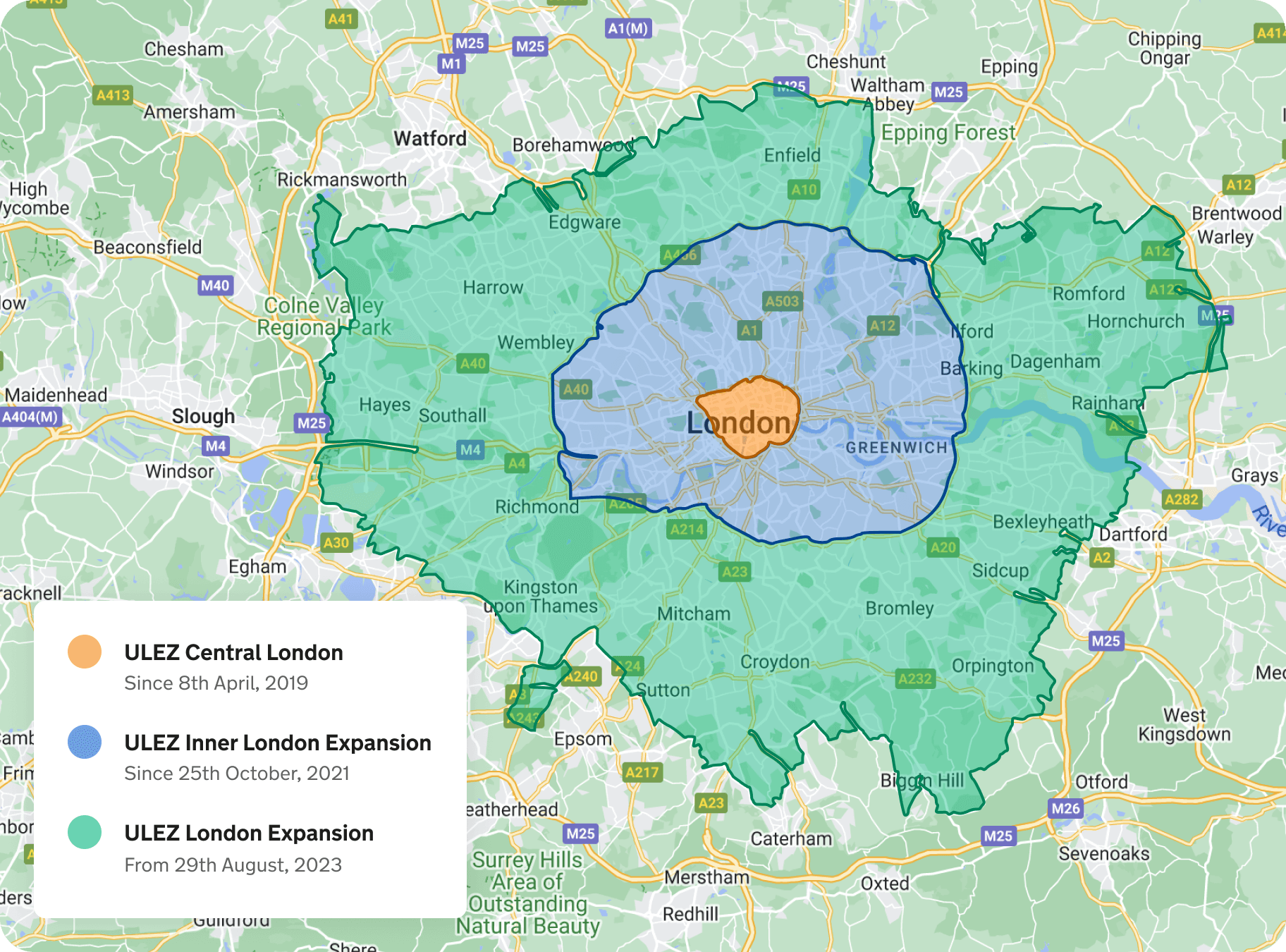
- ULEZ (Ultra Low Emission Zone): This is London’s primary weapon against air pollution from everyday passenger transport. Expanded to encompass every single borough in Greater London, this zone operates 24 hours a day, 7 days a week (except Christmas Day). If your vehicle fails to meet the strict exhaust criteria, simply crossing the boundary line triggers a mandatory £12.50 daily fee.
- LEZ (Low Emission Zone): This scheme has existed across Greater London since 2008 but does not target standard passenger cars or motorcycles. Instead, it focuses heavily on large, diesel-powered commercial transport like heavy lorries, buses, coaches, and larger transit vans. Because these industrial vehicles generate much higher levels of pollution, the non-compliance fees here are significantly steeper, often reaching hundreds of pounds per day.
- CAZ (Clean Air Zone): Introduced by the central government, this framework allows regional councils outside of London to establish their own emission boundaries. Cities like Birmingham, Bristol, Sheffield, Newcastle, and Bath have all launched versions of these zones.
Crucially, Clean Air Zones are split into four distinct tiers, which determine exactly who gets charged:
- Class A: Buses, coaches, taxis, and private hire vehicles
- Class B: Buses, coaches, taxis, PHVs, and heavy goods vehicles (HGVs)
- Class C: Buses, coaches, taxis, PHVs, HGVs, large vans, and minibuses
- Class D: All of the above, plus private passenger cars and motorcycles
Take Note: Places like Birmingham and Bristol operate Class D zones, meaning a private car that drives for free in a Class A city could face an £8 to £10 daily charge there.
The Technical Benchmarks for Compliance
Cities do not arbitrarily decide which individual cars to charge. Instead, the entire system relies on European emission standards, commonly known as Euro status. These standards dictate how much pollutant a vehicle can legally emit based on its manufacture date.
Minimum Vehicle Standards to Avoid Charges
- Petrol Cars & Vans: Must meet Euro 4 standards (generally manufactured from 2006 onwards).
- Diesel Cars & Vans: Must meet Euro 6 standards (generally manufactured from September 2015 onwards).
- Motorcycles & Mopeds: Must meet Euro 3 standards (generally manufactured from 2007 onwards).
Because petrol engines naturally produce less particulate matter, millions of older, budget-friendly petrol hatchbacks can still drive through London or Birmingham completely free of charge. Diesel drivers face a much tougher reality; even relatively modern diesel cars built in 2013 or 2014 will trigger charges because their exhaust systems lack the advanced catalytic technology required to neutralise nitrogen oxides.
How to Instantaneously Verify Your Status
Trying to look through your vehicle's logbook to find your exact Euro standard can be incredibly frustrating. Manufacturers often implemented these standards early, meaning some 2005 petrol cars or 2014 diesel vehicles are unexpectedly compliant.
The most efficient way to remove the guesswork is to run your registration plate through a digital database.
- Head over to an online verification platform like CheckVehicle.ai.
- Type in your UK vehicle registration number.
- Instantly review whether your car is compliant for London's ULEZ or specific regional Clean Air Zones.
Instead of navigating multiple government portals for different cities, a quick registration check gives you an immediate answer before you set off on your journey.
Navigating Exemptions and Additional Fees
Not everyone has to pay these fees, as local authorities have carved out several categories for discounts and total exemptions.
- Electric & Hydrogen Vehicles: Fully electric vehicles and hydrogen fuel-cell cars enjoy total exemption across every single zone in the UK because they produce zero tailpipe emissions.
- Historic Vehicles: Vehicles registered under the historic tax class—which generally applies to any vehicle built more than 40 years ago—are entirely exempt. This recognises that vintage vehicles are rarely used for daily commuting.
- Blue Badge Holders: Drivers of wheelchair-accessible vehicles or badge holders often qualify for specialised grace periods or exemptions, though you usually have to register your documentation with the local transport authority beforehand.
It is also vital not to confuse emission zones with congestion management schemes. In central London, for example, the Congestion Charge is completely separate from the ULEZ. The Congestion Charge aims to reduce physical traffic density rather than pollution. If you drive an older diesel car into the very centre of London during peak daytime hours, you will have to pay both the Congestion Charge and the ULEZ fee simultaneously.
Future-Proofing Your Next Vehicle Purchase
Clean air regulations are not static. As the UK moves closer to its long-term goals of reducing carbon emissions and transitioning away from fossil fuels, the boundaries of these zones are likely to tighten, and the criteria for compliance will inevitably become stricter.
If you are currently shopping for a used car, checking its emission status is just as important as inspecting its service history. Buying a cheap diesel car for your daily commute might seem like a bargain initially, but facing an extra £8 to £12.50 every day will quickly turn it into a financial burden. For those living within or near major metropolitan areas, shifting toward petrol models, modern hybrids, or fully electric vehicles is becoming less of an environmental choice and more of an economic necessity. Always protect yourself from unexpected penalties by using a registration checker before signing any paperwork or embarking on a long cross-country drive.