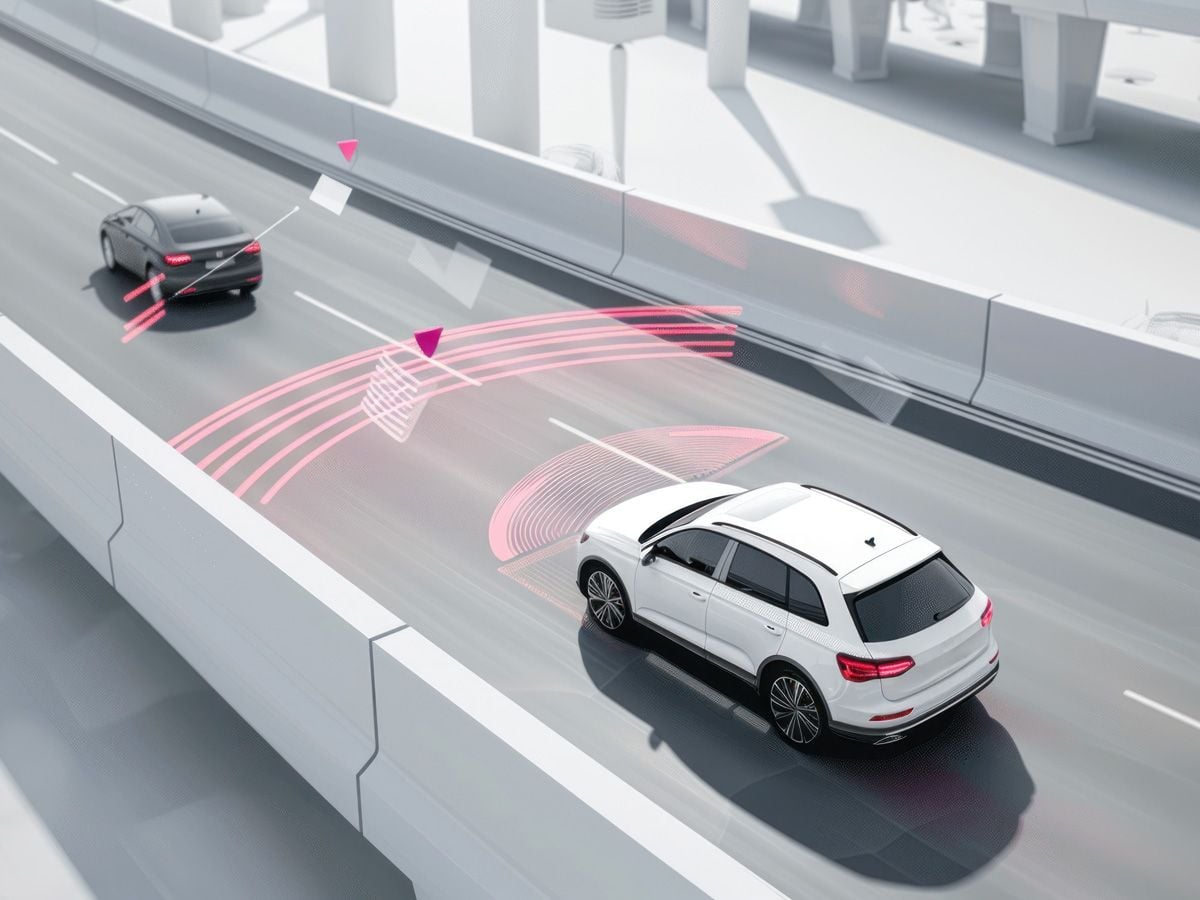
As we move through the spring of 2026, the UK is witnessing a quiet revolution on its tarmac. With the first commercial trials of self-driving passenger services now rolling out under the Automated Vehicles (AV) Act 2024, we are no longer asking if autonomous cars will arrive. They are here. But while the technology is fascinating, the real "under the bonnet" changes are happening in the boring stuff: insurance policies and MOT test bays.
For decades, the foundation of motoring law was simple: the person behind the wheel is responsible. If you hit something, it was your fault (or the other driver's). In 2026, that foundation has cracked. We are entering the era of the "User-in-Charge," a legal shift that moves the burden of safety from human intuition to algorithmic precision. This change is fundamentally rewiring how we protect our vehicles and how the DVSA ensures they are fit for the road.
The Liability Revolution: Who is the "Driver"?
The most significant impact of the AV Act 2024 is the creation of two new legal entities: the Authorized Self-Driving Entity (ASDE) and the No-User-in-Charge (NUIC) operator. In plain English, the ASDE is usually the manufacturer (like Tesla, Ford, or Waymo), and the NUIC is the company running the fleet.
When a car is in "self-driving mode" and an incident occurs, the human in the seat is no longer the first point of blame. In fact, under the new 2026 framework, if the car is driving itself, the "User-in-Charge" has immunity from a wide range of motoring offences, such as dangerous driving or speeding. Liability shifts directly to the manufacturer.
For insurance companies, this is a seismic shift. Traditionally, they priced your premium based on your age, your claims history, and how many points you had on your license. Now, they are increasingly "underwriting the algorithm." Insurers are now looking at the safety record of the car's software stack rather than just the person sitting in the cabin. Your 2026 insurance policy is likely a hybrid: one part covers you for when you are manually parking or navigating a tricky country lane, and the other part is a product liability policy backed by the car's maker.
The "Digital Witness": Data as the Ultimate Arbiter
In the past, an insurance claim often came down to "he said, she said." In 2026, the car is the ultimate witness. Automated vehicles are now equipped with Data Storage Systems for Automated Driving (DSSAD). These are essentially black boxes that record every sensor input, every millisecond of software decision-making, and, crucially, exactly who was in control at the moment of impact.
This data is the bridge between a quick payout and a five-year legal battle. If a collision happens, the insurer accesses this timestamped data to see if the "Autonomous Mode" was active. If it was, the insurer pays the victim immediately (as per the Automated and Electric Vehicles Act 2018) and then goes after the manufacturer to recover the costs.
However, this brings a new responsibility for the owner. To keep your insurance valid in 2026, you must prove that the vehicle's connectivity was active and that no "safety-critical" software updates were ignored. If you decline a manufacturer's patch that fixes a known sensor glitch and then have an accident, the liability could swing right back onto you for "negligent maintenance."
The MOT Evolution: Beyond Tyres and Treads
The traditional MOT is a physical check of rubber, metal, and glass. But as of February 2026, the DVSA has formally introduced visual checks for Advanced Driver Assistance Systems (ADAS) into the inspection manual. This is the first step toward the "MOT of the future."
Testers are now looking for more than just a cracked light. They are inspecting:
- Sensor Integrity: Checking that radar units in the bumpers and cameras behind the windscreen are securely mounted and free from obstructions like heavy stone chips or poor-quality glass repairs.
- Calibration Records: Ensuring the system hasn't flagged a "calibration required" warning, which often happens after a minor bump or even a wheel alignment change.
- Malfunction Indicator Lamps (MIL): In 2026, a glowing "Lane Assist" or "Emergency Braking" warning light is an automatic "Major" fail.
We are also seeing the rollout of "In-Use Regulatory Schemes." The government is moving toward a system where a car’s "roadworthiness" is monitored remotely. If a vehicle's self-diagnosis system detects a failing LiDAR sensor, it may soon be able to report itself to the DVSA, essentially flagging the vehicle as unroadworthy before it even reaches the MOT station.
The "Software as a Part" Problem
In the eyes of a 2026 vehicle inspector, software is now a "wearable part," just like brake pads. If your car’s autonomous system relies on high-definition mapping data that is six months out of date, is the car safe?
This is the new frontier for vehicle checks. We are likely to see "Digital MOTs" where a tester plugs into the OBD-II port not just to check emissions, but to verify the "checksums" of the safety software. This ensures that the car hasn't been "chipped" or modified in a way that interferes with its autonomous safety logic. For the enthusiast community, this is a tough pill to swallow; the days of "backyard tuning" are becoming increasingly difficult when the car’s insurance and legal status depend on un-tampered factory code.
Impact on Premiums: The Safety Dividend?
The ultimate promise of self-driving tech is that it will eliminate the 90% of accidents caused by human error: fatigue, distraction, and "one too many" at the pub. In theory, this should crash insurance premiums.
In reality, the 2026 market is seeing a bit of a "split." While the frequency of accidents is dropping in autonomous fleets, the cost of repairs is skyrocketing. A small "fender bender" that used to cost £500 for a new plastic bumper now costs £5,000 because of the three radar sensors and two ultrasonic cameras hidden behind that plastic.
As a result, premiums for self-driving cars haven't dropped as fast as many hoped. Instead, they have shifted. You might pay less for "driver risk" but more for "technology risk." The "safe driver" discount is slowly being replaced by the "safe platform" discount.
Summary: The New Ownership Checklist
To navigate this new landscape, a UK motorist in 2026 needs a new set of habits. The "Cheat Sheet" for the autonomous era looks like this:
- Update Promptly: Treat your car like your smartphone. If a "Critical Safety Update" appears on your dash, install it immediately. Your insurance coverage may depend on it.
- Keep Sensors Clear: In winter, road salt and grime can "blind" an autonomous car. A dirty sensor isn't just a nuisance; it can cause the system to disengage or, in some cases, fail an inspection.
- Audit Your Data: Know what your car is recording. In the event of an incident, ensure you know how to request your "DSSAD" report to prove you weren't the one steering when the car decided to take a shortcut through a hedge.