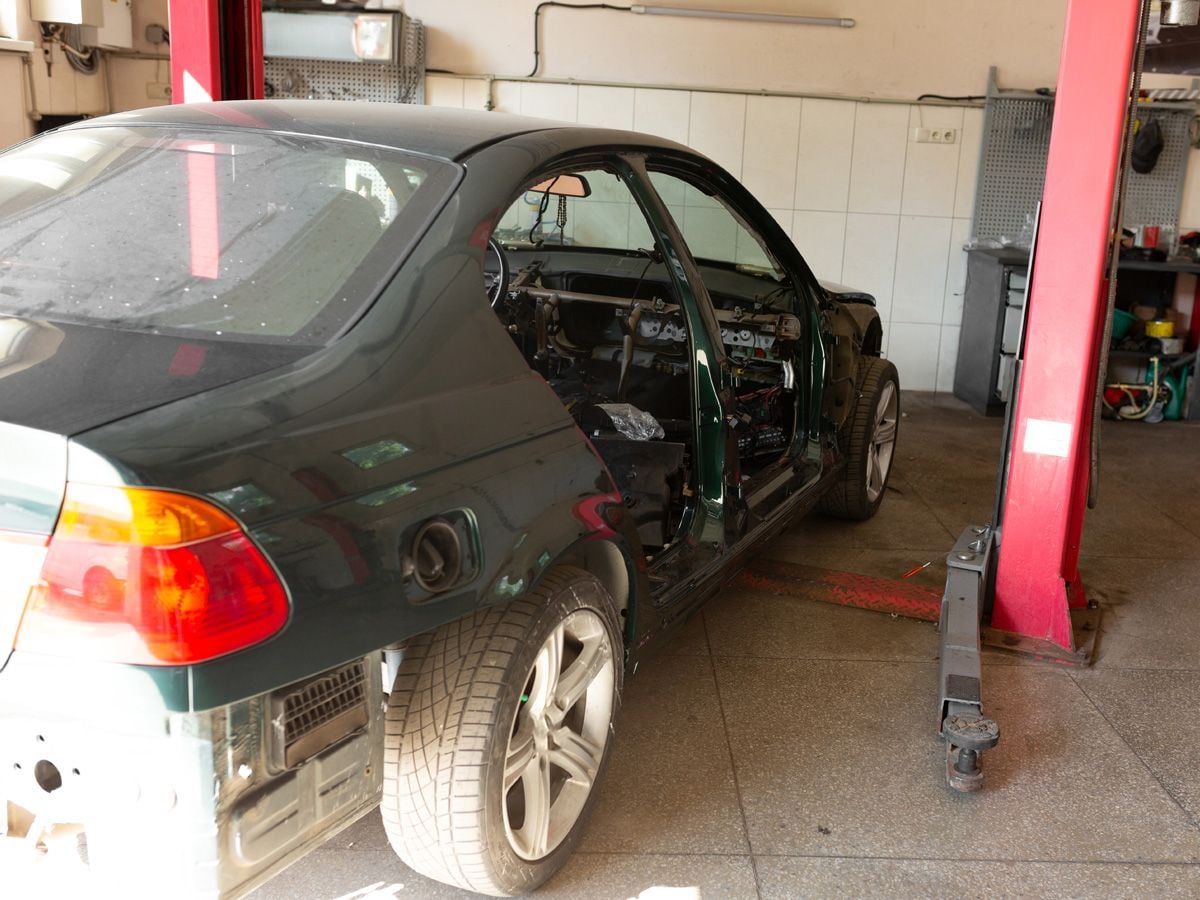
The MOT failure rate of a car model refers to the percentage of that model’s vehicles that do not pass the Ministry of Transport (MOT) test on the first attempt. Recent data from the Driver and Vehicle Standards Agency (DVSA) – analysed by automotive sites using 2024 MOT results – reveals the car models with the worst MOT records in the UK. Notably, all of the 10 worst-performing models are older passenger cars (mostly early-2000s models) with first-time pass rates below 50%. This is far below the overall UK average MOT pass rate of ~71.4% (i.e. ~28.6% failure) in recent years. Given that the average car on UK roads is about 9 years old, these aging models (15–20+ years old) struggle with reliability – it’s understandable that high-mileage cars from the 2000s would have such low pass rates.
Below is the 2025 “Top 10” list of passenger car models with the highest MOT failure rates, along with their approximate failure percentages and any notable context (all are discontinued models, excluding vans or motorcycles):
- Mitsubishi Space Star (1999–2005) – Only about 45.3% of tested Space Stars passed their MOT in 2024 (meaning ~54.7% failed), giving this small 2000s-era MPV the worst pass rate of any car model. Mitsubishi sold the Space Star as a budget mini-MPV, and while ~943 were still tested last year, over half could not meet modern roadworthiness standards. With the newest Space Stars now 20+ years old, age-related wear (from suspension to lighting and rust) likely contributes to its dismal MOT performance. Mitsubishi Space Star (1999–2005) – an early-2000s compact MPV – tops the list with the highest MOT failure rate in the UK (only ~45% pass on the first try). This ageing model highlights how older cars struggle to meet MOT requirements: nearly 54% of Space Stars failed, reflecting serious wear-and-tear issues as the vehicles surpass two decades on the road.
- Peugeot 807 (2002–2010) – 46.1% MOT pass rate (≈53.9% fail). The Peugeot 807 is a large French MPV (people-carrier) that was once popular for families and taxis. Now over a decade out of production, only about 692 of them were tested (DVSA data Jan–Oct 2024), and more than half failed initially. Its sister model (Citroën C8) shares many components and similarly struggles to pass MOTs, as age and high mileage take a toll on critical components.
- Citroën C8 (2003–2010) – 46.5% MOT pass rate (≈53.5% fail). The Citroën C8 was a jointly-developed Eurovan MPV known for its spacious 7-seater design. However, as these vehicles age (the oldest are ~20 years old), their MOT success has plummeted. Out of ~636 tested C8s, only 46.5% passed on first attempt. Owners often face costly repairs to keep these MPVs roadworthy, and the low pass rate shows many C8s suffer from issues like worn suspensions, brakes, or emissions components common in older vans.
- Dodge Caliber (2006–2009) – 47.2% MOT pass rate (≈52.8% fail). The Dodge Caliber – a short-lived American crossover hatchback sold in the late 2000s – has one of the highest failure rates. Of the ~551 Calibers tested, barely half passed outright. The Caliber’s build quality was poor (even when new), and as a result, surviving examples often have multiple defects. (Notably, analysts only considered models with >500 tests; the Caliber just met this cutoff, underlining how few remain on UK roads).
- Daewoo Matiz (1998–2005) – 47.5% MOT pass rate (≈52.5% fail). This tiny Korean city car (also later badged as Chevrolet Matiz) is an economy model now up to 25+ years old. In 2024, just over 600 Matiz cars went through MOT tests and only about 47.5% passed on the first try. The Matiz was built to a budget – its tiny engine and lightweight construction mean many components (from engines to bodywork) are well past their prime, explaining why more Matiz cars fail than pass nowadays.
- Citroën Grand C4 Picasso [First Generation] (2007–2013) – 47.6% MOT pass rate (≈52.4% fail). The first-gen Grand C4 Picasso is a 7-seat family MPV that was lauded for practicality in its day, but early models are now showing their age. Out of ~2,875 tested in 2024, only 47.6% passed initially. Common age-related problems (suspension wear, electrical gremlins, etc.) likely explain the failures. Citroën’s own data indicates the newer second-generation (2014–2018) Grand Picasso fares much better with ~67.8% pass rate, illustrating how newer design and components improve reliability.
- Chevrolet Kalos (2005–2008) – 47.6% MOT pass rate (≈52.4% fail). The Chevy Kalos (a rebadged Daewoo subcompact) is another mid-2000s budget car aging poorly. About 1,584 Kalos were tested and fewer than half cleared the MOT without repairs. Owners of remaining Kalos cars face issues typical of cheaply-built older superminis – from rust to failing suspension joints – reflected in this low pass rate. (Chevrolet’s later models on this same platform also appear on this list, underscoring the brand’s reliability woes in that era.)
- Chevrolet Aveo (2008–2015) – 48.4% MOT pass rate (≈51.6% fail). The Aveo was the successor to the Kalos – a small, inexpensive hatchback sold in two generations (the last UK models were sold in 2015). Even the newest Aveos are around a decade old now, and only 48.4% passed their MOT in recent tests. Thousands of Aveos were examined, and over half needed fixes to pass. Despite a decent initial warranty and acceptable performance when new, the Aveo’s durability hasn’t held up; many now suffer from worn-out parts (steering, brakes, etc.), driving up the failure rate.
- Peugeot 307 (2001–2007) – 48.6% MOT pass rate (≈51.4% fail). The Peugeot 307 was a very popular family hatchback in the early 2000s – nearly 20,000 of them still went through MOT tests last year. Unfortunately, less than half passed on the first attempt. The 307 developed a reputation for spotty reliability as it aged, which the stats confirm. Common failure points include lighting and suspension issues, and generally the 307’s maintenance needs grow significantly with age. By comparison, a similar vintage VW Golf tends to fare better, with higher pass rates, reflecting more robust build quality.
- Chevrolet Lacetti (2005–2011) – 48.9% MOT pass rate (≈51.1% fail). Rounding out the list is the Chevrolet Lacetti, a budget compact car (notably featured as Top Gear’s “reasonably priced car” in the late 2000s). Out of ~1,380 Lacettis tested, only 48.9% passed outright. The Lacetti’s aging engines and subpar build mean many struggle with emissions and mechanical faults during inspections. Production ended in 2011 and numbers on the road have dwindled – those remaining often require significant repairs (brakes, suspension, rust, etc.), leading to over half failing their MOT at first presentation.
Common Causes of MOT Failures and Age-Related Insights
The high failure rates above are largely driven by age-related wear and tear. As vehicles get older, critical components deteriorate – increasing the likelihood of failing MOT checks. The DVSA’s data on MOT tests shows that the most frequent failure points are typically basic safety and maintenance items that degrade over time:
- Lighting and signaling issues – e.g. blown bulbs, faulty indicators or brake lights.
- Suspension faults – e.g. broken coil springs, worn shock absorbers, or damaged suspension arms.
- Brake system failures – e.g. worn brake pads/discs, brake fluid leaks, or imbalanced braking.
- Tyres in poor condition – low tread depth (under 1.6 mm legal limit), cracks, bulges, or other damage.
- Driver visibility issues – e.g. worn wiper blades, cracked/chipped windscreen, faulty washers.
- Structural and bodywork problems – excessive corrosion or damage to the chassis/body that compromises safety.
- Fuel and exhaust emissions – failing emissions standards (e.g. due to catalytic converter or EGR issues) or exhaust leaks.
- Steering irregularities – play or wear in steering components, power steering faults, etc.
- Seat belt and restraint system faults – damaged seat belts or buckles that don’t function properly.
- Miscellaneous defects – for example, a non-functioning horn, broken mirrors, or an insecure battery mounting.
It’s clear that older vehicles (like the 10 models above) are far more prone to these issues. Components that are 15-20 years old have often seen heavy use or inadequate maintenance, leading to lights burning out, suspension sagging, rust taking hold, and engines running less cleanly. In fact, industry analysis explicitly notes that most cars on the worst-performing list are “over a decade old and likely have high mileage,” which makes their sub-50% pass rates understandable. In contrast, newer cars tend to have much higher pass rates – for example, the average pass rate for 3-year-old cars is significantly above that of 15-year-old cars.
In summary, if you own one of these top 10 high-failure models, be aware that they fail the MOT more often than they pass. Regular upkeep is crucial - addressing common failure items (lights, brakes, tyres, etc.) before the test can improve your chances. However, the data shows that due to age and design, these models are inherently high-risk for MOT failure compared to the typical modern car. Always consult official DVSA MOT data or tools (such as MOT history checkers) for the latest statistics, and ensure your vehicle is well-maintained to avoid becoming part of these failure statistics.
Sources: DVSA MOT performance data analysed by: Regit, LADbible, GB News of the worst MOT performers. These sources provide detailed insight into MOT failure rates and reasons in the UK as of 2024–2025. Each cited percentage and fact above is drawn from reliable data to ensure factual accuracy.