
To check if a car is stolen, run a stolen car check on the registration before you pay, then make sure the car in front of you really is the car on the paperwork. That means matching the VIN on the car to the V5C log book, checking the V5C for a "DVL" watermark and a serial number outside the ranges DVLA lists as stolen, and seeing the car at the address printed on the log book. A clean history report alone won't catch a cloned car, because a clone borrows the identity of a genuine car that hasn't been stolen.
Why buying a stolen car costs you the car and the money
Under section 21 of the Sale of Goods Act 1979, when goods are sold by someone who isn't their owner, "the buyer acquires no better title to the goods than the seller had". Lawyers call this the nemo dat rule: you can't give what you don't have. A thief has no title to a stolen car, so neither do you, however honestly you bought it.
In practice, if police identify the car as stolen it goes back to the rightful owner or their insurer, and you don't get your money back from them. Your claim is against the seller, which is worth very little if they used a false name.
Vehicle crime is still common. The Office for National Statistics Crime in England and Wales bulletin for the year ending March 2026 (published 23 Jul 2026) recorded 312,250 police-recorded vehicle offences, down 11% on the previous year. That figure includes theft from vehicles as well as theft of them, so it isn't a count of stolen cars.
How car cloning works
A cloned car is usually a stolen car disguised with the identity of a legitimate one. The process tends to follow the same pattern:
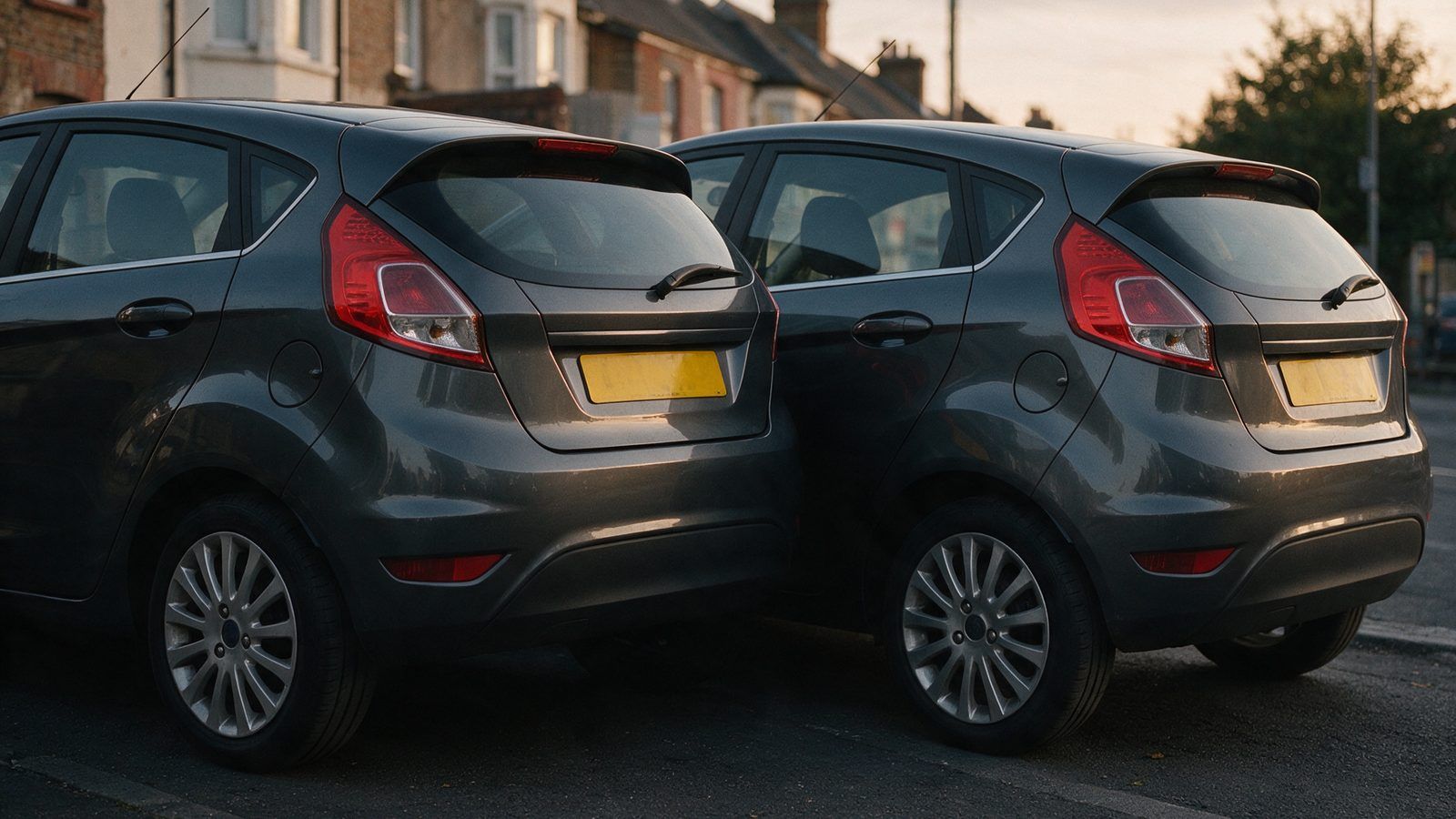
- Thieves steal a car, often a keyless model taken using a relay device that boosts the signal from the fob inside the owner's house.
- They find a genuine car of the same make, model and colour, often in an online advert, and copy its registration.
- They have fake number plates made up with that registration and fit them to the stolen car.
- They produce paperwork to match, sometimes a forged V5C and sometimes a genuine blank V5C stolen before it was ever issued.
- They advertise the car at a tempting price and arrange to meet somewhere that isn't their home.
Because the registration belongs to a real car, a history check on it comes back clean. The giveaway is a VIN, engine number or document that doesn't match the car.
Run a stolen car check first
Start with the registration number before you even travel to see the car. Run the plate through a free car check on CheckVehicle to confirm the make, model, colour, engine size and year match the advert. A mismatch at this stage (say the advert shows a silver 2019 car but DVLA records a black 2017 one) needs a good explanation before you go any further.
A paid report adds checks against stolen-vehicle records, insurance write-off records and outstanding finance. A car with finance owing can be recovered by the lender (see how to check for outstanding finance on a used car), and a write-off may have been repaired and quietly put back on sale (see how to check if a car is written off).
Run the check again on the day you pay. A car can be reported stolen between your first look and handing over the money.
A clean report tells you the registration number isn't flagged. It can't tell you whether the plates on the car are genuine, so the physical checks below still matter.
How to check the VIN matches
The vehicle identification number (VIN) is the car's unique identity. On cars built since the early 1980s it's usually 17 characters long, and GOV.UK describes it as a unique, stamped-in number, usually on the chassis. Plates can be swapped in minutes; a VIN is much harder to fake.
Where to find the VIN
Most cars show it in at least 3 places, though the exact spots vary by manufacturer:
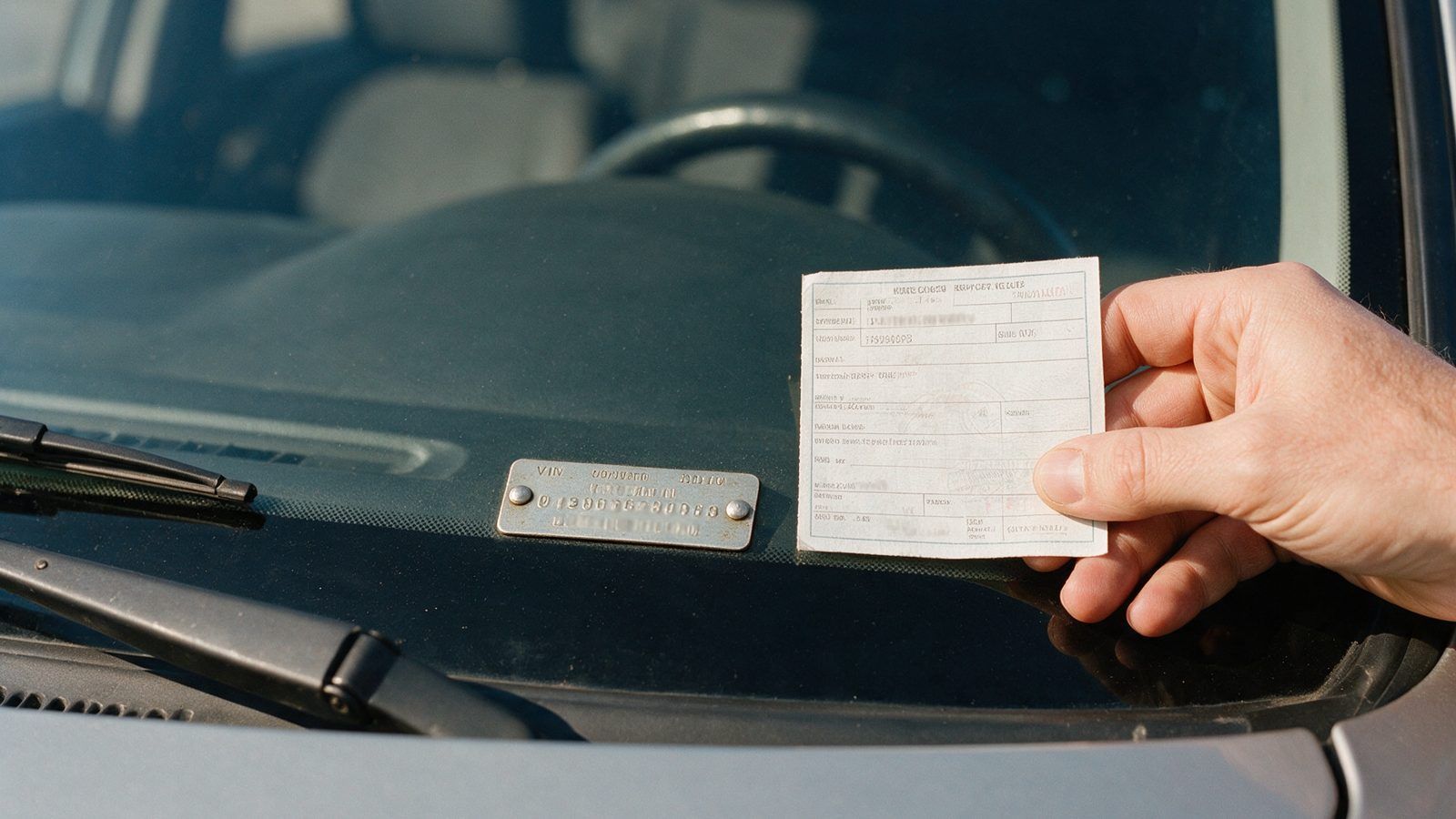
- At the base of the windscreen, visible from outside, usually on the passenger side.
- Stamped into the bodywork, often under a flap in the carpet next to a front seat or in the engine bay.
- On a printed label on a door pillar, usually where the driver's or passenger's door closes.
- On the V5C log book, which lists the VIN alongside the registration.
The owner's handbook will tell you where the stamped VIN is on that model if you can't find it.
What to look for
Every VIN on the car should match the others and the V5C, character for character. Look closely at the windscreen VIN plate and the door pillar label for scratches, glue residue, fresh rivets or stickers that look newer than the car around them. Around the stamped VIN, look for ground-down metal, fresh paint, filler or characters that sit at uneven heights or depths.
GOV.UK's checks when buying a used car also tells you to make sure the engine number matches the log book. It's stamped on the engine and can be hard to spot, but worth finding on a car priced well below market.
Reading the VIN electronically
Modern cars store the VIN in their electronic control units. A garage with an OBD diagnostic tool can read it from the port under the dashboard. If it doesn't match the physical VIN, either modules have been swapped from another car or the identity has been altered. That isn't proof of theft, but it needs explaining.
How to check the V5C log book
Ask to see the V5C before you discuss money. GOV.UK sets out the main checks:
- Hold it up to the light and look for a "DVL" watermark in the paper.
- Check the serial number. GOV.UK says the V5C might be stolen if it is between BG8229501 and BG9999030, or between BI2305501 and BI2800000. If it falls in either range, GOV.UK's advice is to call the police when it's safe to do so.
- Make sure the registration number, VIN, make, model and colour match the car.
- Check the name and address of the registered keeper match the seller and the place you're viewing the car.
The V5C also carries an 11-digit document reference number. Only the most recent V5C is valid, and the seller needs that number to tell DVLA about the sale online. If the seller can't produce the log book at all, says it's "in the post", or offers a photocopy, treat that as a serious warning. See what paperwork you should receive when buying a car.
A V5C proves who the registered keeper is. It doesn't prove ownership, so a genuine log book doesn't rule out finance owing or a seller who isn't entitled to sell.
How to spot cloned or fake number plates
Since 1 Sep 2021, number plates fitted to cars must be marked with the British Standard "BS AU 145e" and with the identity of the supplier who made them, according to the GOV.UK rules for number plates. Plates can only legally be made by a registered number plate supplier, who must see original documents proving the customer's name and address and their right to use the registration, such as the V5C.
Criminals get round this with online "show plates" or backstreet suppliers, so look at the plates themselves:
- Check for the BS AU 145e marking and a supplier name. An older car may still have earlier plates with an older standard, which is fine, but a recent car with unmarked plates is worth asking about.
- Look at the screws or fixings. Fresh screws, new holes or sticky pads on an otherwise tired car suggest the plates were changed recently.
- Compare the front and rear plates. They should come from the same supplier and look the same age.
Signs the seller or the deal is wrong
Fraudsters selling stolen cars tend to pose as private sellers, since a business with premises is easier to trace. Our guide to buying privately vs from a dealer explains the legal differences. Watch for these signs:
- The price is well below similar cars and the seller wants a quick sale.
- The seller wants to meet in a car park, a service station or outside a house they don't seem to live in.
- The seller's name or address doesn't match the V5C.
- There's only 1 key, or a key that looks newer than the car, with a vague reason for the missing spare.
- The seller asks for cash or a bank transfer to an account in a different name.
- They push back on you running checks or getting the car inspected.
None of these proves a car is stolen, but several together should make you stop. For more patterns fraudsters use, see top car buying scams and how to avoid them.
Cut and shuts and ringers
A "ringer" is a stolen car given the identity of a written-off car of the same model, and a "cut and shut" is two damaged cars welded together. Look for weld marks or uneven seam sealer around door pillars and under carpets, uneven panel gaps, mismatched paint, and date labels on seatbelts or glass that don't fit the car's age. If you're unsure, pay for an independent inspection.
What to do if your number plate is cloned
If you start receiving speeding tickets, parking fines or congestion charges for places you haven't been, someone may be using your registration on another car. GOV.UK's guidance on what to do if your number plate is cloned says:
- Report it to the police. In England and Wales you can use the police online cloned number plates form or call 101; in Scotland and Northern Ireland, call 101. You need to be the registered keeper or have their permission.
- Tell DVLA by letter (DVLA, Swansea, SA99 1AR) with your police reference number, the registration and copies of the wrong fines. If you used the police online form in England or Wales, the police tell DVLA for you.
- Appeal each fine with the organisation that issued it, explaining that you've reported the cloning to the police and DVLA.
You can keep driving your car, but police may stop it because they're looking for the clone. Carry your police reference number, V5C and driving licence. Photos showing how your car differs from the one in camera images help with appeals.
Before you pay
- Run a stolen car check on the registration, and repeat it on the day you buy.
- Match the VIN in every location on the car to the V5C.
- Check the V5C watermark and serial number against the GOV.UK ranges.
- View the car at the address on the V5C and confirm the seller is the registered keeper.
- Look at the plates for the BS AU 145e marking and a supplier name.
- Pay by bank transfer to an account in the seller's name so there's a record, and get a written receipt with both names, addresses, the registration and the VIN.
Our 10 things to check before buying a used car covers the mechanical side, and how to spot clocked mileage helps with another common fraud.
Frequently asked questions
How can I check if a car is stolen for free?
Start by running the registration through a free check to confirm the car's details match DVLA records and the advert. Checking against stolen-vehicle records is usually part of a paid history report. Whatever check you use, also match the VIN to the V5C yourself, because a cloned car will show a clean result for the borrowed registration.
What happens if I unknowingly buy a stolen car?
You don't become the legal owner, because under section 21 of the Sale of Goods Act 1979 a buyer gets no better title than the seller had. The car can be taken back and returned to the owner or their insurer. You can try to recover your money from the seller, which is very difficult if they gave false details.
How do I do a cloned car check?
Compare the VIN on the windscreen, the stamped body VIN and the door pillar label against the VIN on the V5C. Check the V5C watermark and serial number, and confirm the colour, engine size and model match DVLA's records. If anything doesn't match, get it explained before any money changes hands.
Can a car with a genuine V5C still be stolen?
Yes. Criminals sometimes use genuine blank V5Cs that were stolen before being issued, which is why GOV.UK publishes serial number ranges to avoid. The VIN check is what links the document to the actual car.
What is BS AU 145e on a number plate?
It's the British Standard that number plates fitted after 1 Sep 2021 must meet, and the plate should be marked with it along with the supplier's identity. Plates must come from a registered number plate supplier who has seen proof of identity and entitlement to the registration. Missing markings on a recent car can point to plates made without those checks.