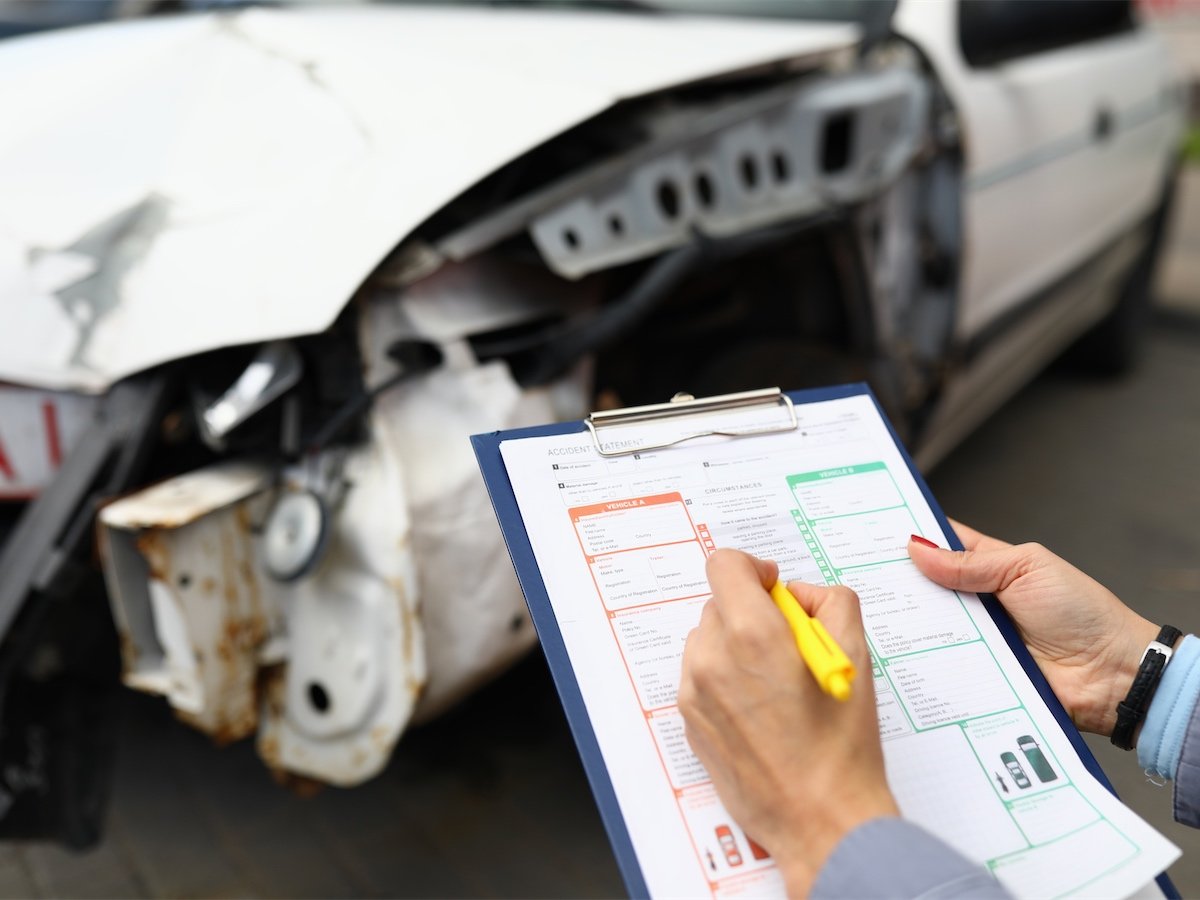
The quickest way to check if a car has been written off is to run its registration through a vehicle history check, which searches insurance write-off records and tells you the category (A, B, S or N, or the older C and D) and usually the date of loss. Do the write off check before any viewing or deposit, then back it up with the V5C logbook, the MOT history and a look at the car, because a history check only shows what insurers have reported.
Cars in a repairable category are legal to buy and drive once they are roadworthy. The bigger risk is paying full price for one because the seller kept quiet about it.
What "written off" means in the UK
A car is written off when an insurer decides it is a total loss after a claim, for example after a crash, flood, fire or theft recovery. The insurer then pays out the car's current value instead of paying for repairs.
That decision is often about money. Say a 9-year-old hatchback is worth £4,000 and needs £3,500 of parts and labour after a front-end shunt: an insurer may well write it off, even though the repair is routine.
The current categories: A, B, S and N
UK insurers sort salvage using a code of practice. The current version came into effect in October 2017, according to the Department for Transport consumer guide on buying repaired written-off vehicles. GOV.UK's guidance on written-off vehicles sets out the four categories:
- Category A: cannot be repaired, and the entire vehicle has to be crushed.
- Category B: cannot be repaired, and the body shell has to be crushed, though other parts can be salvaged and sold.
- Category S: can be repaired after structural damage and used again once it is roadworthy.
- Category N: can be repaired after damage that was not structural and used again once it is roadworthy.
Cat A and Cat B cars should never come back on the road. If a check shows either against a car advertised as a runner, it may be cloned or re-identified, and you should report it.
Cat S covers damage to the parts of the car that hold it together in a crash, such as chassis legs, pillars, sills or crumple zones. Cat N covers everything else: bodywork, electrics, airbags, lights, trim. A Cat N car can still have had expensive damage, such as deployed airbags.
The old categories: C and D
Before October 2017, repairable write-offs were Category C and Category D. These were based mainly on the cost of repair compared with the car's value, with C being the more expensive repair. They did not tell you whether the damage was structural.
Cars written off before the change kept their old category, so you will still see Cat C and Cat D in history checks. A Cat C car may or may not have had structural damage, so use the old categories as a prompt to ask what was actually repaired.
If you are weighing up whether a repaired write-off is worth buying at all, our guide on whether to buy a car with a Category N or S write-off goes into the pros and cons in more detail.
How to do a write off check
The DVLA's free vehicle enquiry service shows tax, MOT expiry and other basics, but not write-off status. For that you need a vehicle history check.
Run a history check on the registration
Write-off records come from the Motor Insurance Anti-Fraud and Theft Register, known as MIAFTR. According to the Motor Insurers' Bureau, MIAFTR is a database of written-off and stolen vehicles, MIB is its data controller, and access is limited to subscribers: around 300 organisations including insurers, fleet operators and police forces. The public cannot search it directly.
A free car check on CheckVehicle will show you the basics and MOT history. Our paid reports add write-off, stolen and outstanding finance records.
A few things to know when you read the result:
- A clean result means no write-off has been recorded against that registration. It does not prove the car has never been damaged, because accidents that were never claimed on (or were paid for privately) will not appear.
- If a car has had a private plate added or removed, run the check on the current plate and compare the VIN in the report with the VIN on the car and the V5C.
Check the V5C logbook
GOV.UK says that if an owner wants to keep a Category S vehicle, they must send the complete logbook to their insurer and apply for a free duplicate using form V62, and that DVLA will record the vehicle's category in the logbook. For a Category N car, the guidance says the owner can keep their existing logbook. In practice, that means a Cat S car should have its category recorded on the V5C, while a Cat N car's V5C will often show nothing about the write-off. Cat N is still recorded on the insurance side, which is what a history check reads.
Also compare the "date of issue" on the V5C with the "last V5C issue date" on the DVLA vehicle enquiry service. If they do not match, the seller is not holding the latest logbook, and you should find out why before going further.
A recently issued V5C on an older car can be innocent (people lose logbooks), but ask about it if you also see fresh paint. Our guide to the paperwork you should receive when buying a car covers the V5C in more detail.
Read the MOT history
The MOT history will not say "written off", but it can fill in the story. Look for:
- a long gap with no MOT tests, which can mean the car was off the road being repaired
- a sudden drop in mileage recorded between tests, or a mileage jump that does not fit the gap in time
Use the official MOT history service or our MOT history check guide to work through what the entries mean.
Signs a car has had accident repairs
A history check won't show repairs that were never claimed on, so look at the car yourself in daylight, on a dry day, on level ground.
Panel gaps and paint
Walk round the car and look at the gaps between the bonnet and wings, the doors and the body, and the boot lid and rear quarters. A gap that is tight at one end and wide at the other suggests the panel has been refitted or the structure behind it has moved.

Then look at the paint from an angle. A slightly different shade on one door or wing, a rippled "orange peel" texture, or overspray on rubber seals, badge edges or plastic trim are all signs of a respray. A single repainted bumper is common after a scrape and means less than overspray inside the door shuts.
Under the bonnet and in the boot
Open the bonnet and look at the bolts that hold the wings and the front panel in place. Paint that has been cracked or scratched off the bolt heads suggests the panels have been removed. Check the front crossmember and inner wings for wrinkles, fresh welds or uneven seam sealer.
In the boot, lift the floor covering and look at the spare wheel well. Ripples in the metal, new sealer that looks hand-applied, or patches of fresh primer can mean a rear impact.
Glass, lights and airbags
Most car glass and many headlight units have a small date code printed on them. If one window or one headlight is several years newer than the rest, that corner may have been repaired. Glass gets replaced for plenty of innocent reasons (stone chips, break-ins), so treat it as something to ask the seller about.
Check the airbag warning light comes on when you switch on the ignition and goes out after a few seconds. A light that stays on, or never comes on at all, needs explaining.
On a car you are serious about, especially a Cat S, it is worth paying for an independent inspection. The DfT consumer guide recommends getting a report from an independent expert or engineer to identify any structural damage.
What a write-off means for insurance and resale
The DfT guide says a written-off vehicle can be more expensive to insure. It also says you should tell your insurer that the car has previously been declared a total loss, because failing to do so could put a future claim at risk. Get a quote on the actual registration before you buy.
A recorded write-off stays with the car, and future buyers who run a check will see it, so expect to sell for less. There is no official figure for how much value a Cat S or Cat N car loses, so compare prices for comparable written-off and clean cars on the same model before you agree a price. Our guide on negotiating the price of a used car can help with that conversation.
Your rights if a write-off was not disclosed
What you can do depends on who sold you the car.
Buying from a dealer
If you bought from a trader, the Consumer Rights Act 2015 applies. The car must be of satisfactory quality, fit for purpose and as described. Satisfactory quality includes safety and freedom from minor defects. If the car does not meet those standards, you have a short-term right to reject it for a full refund. Under section 22 of the Act, that right normally lasts 30 days, starting the day after you take ownership and delivery.
If the dealer described the car as accident-free, or the advert left out a write-off that would have changed your decision, you may also have a claim for misrepresentation. Keep the advert and messages. If the write-off was pointed out to you before you bought, you cannot complain about it later.
Buying privately
Private sellers have fewer obligations. They do not have to volunteer every detail, but the car must match the description they gave you. Under the Misrepresentation Act 1967, if a seller makes a false statement of fact (for example, "it's never been in an accident" or "it's not a write-off") and you bought the car because of it, you may be able to claim damages or unwind the sale. It helps to have asked in writing before you view: "Has this car ever been written off or had an insurance claim?" Our article on buying privately vs from a dealer covers the wider differences in your rights.
Before you pay
Run through this on any used car:
- Run a write off check on the registration and note the category and date if one shows.
- Match the VIN on the car (base of the windscreen and the stamped plate) with the V5C and the history report.
- Compare the V5C issue date with the DVLA vehicle enquiry service.
- Read the full MOT history for gaps and mileage oddities.
- Get an insurance quote on the exact registration.
- For a Cat S car, ask for repair invoices and photos, and consider an independent inspection.
- Get the seller's answer about accident history in writing.
Our guide to common car buying scams explains how cloned and re-identified cars are sold.
Frequently asked questions
Can I check if a car is a write off for free?
The DVLA's free vehicle enquiry service and the MOT history checker do not show write-off status. Write-off records sit on MIAFTR, which only subscribing organisations can search, so you need a history check that includes insurance write-off data. Some providers include it in a paid report.
How do I do a Cat S check?
Run the registration through a history check that includes write-off data and look for Category S (or the older Category C). A Cat S car kept by its owner after the payout should also have its category recorded on the V5C, so check the logbook too.
How do I do a Cat N check?
The same history check will show Category N (or the older Category D). Don't rely on the V5C for Cat N, because GOV.UK guidance lets the owner keep their existing logbook, so the document may say nothing about the write-off.
Is it illegal to sell a written-off car without telling the buyer?
For Cat S and Cat N cars, selling is legal. A dealer who sells one without disclosing it may be in breach of the Consumer Rights Act 2015, and any seller who lies about it when asked may be liable for misrepresentation. Cat A and Cat B cars should never be sold as roadworthy vehicles.
Does a write-off show up on the MOT history?
No. The MOT record shows tests, results, advisories and mileage, not insurance history. Long gaps between tests or odd mileage readings can hint that a car was off the road for repairs, but you need a history check to confirm a write-off.